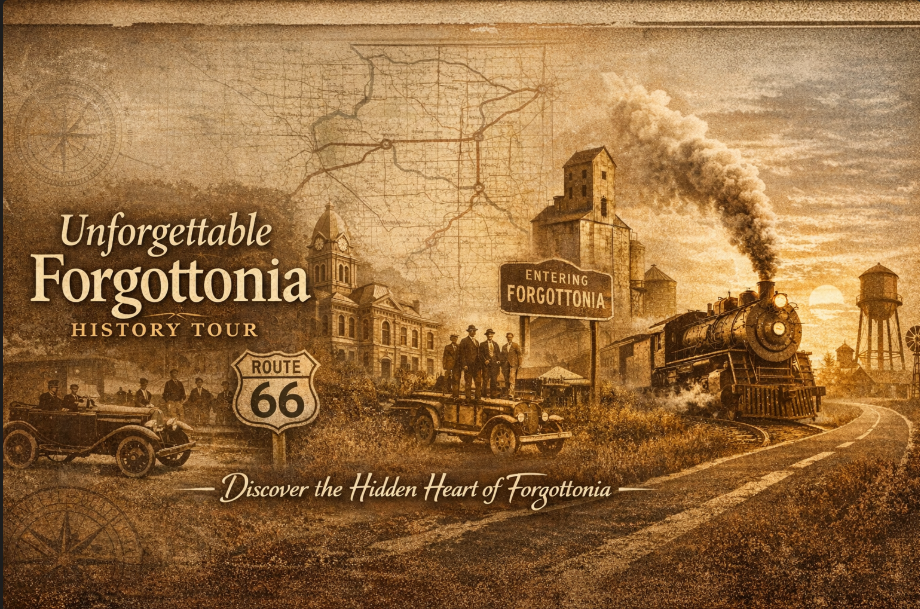
Visit Unforgettable Forgottonia History Tour
Step back in time with a self-guided journey through the hidden histories of Macomb and McDonough County. from the courage of civil rights leaders and the brilliance of inventive thinkers like the creator of Monopoly, to the soulful rhythms of national music legends. Along the way, you’ll encounter gritty Prohibition-era stories and nostalgic Cold War relics. It’s more than an itinerary; it’s a deep dive into the extraordinary people and places that make Forgottonia truly unforgettable.
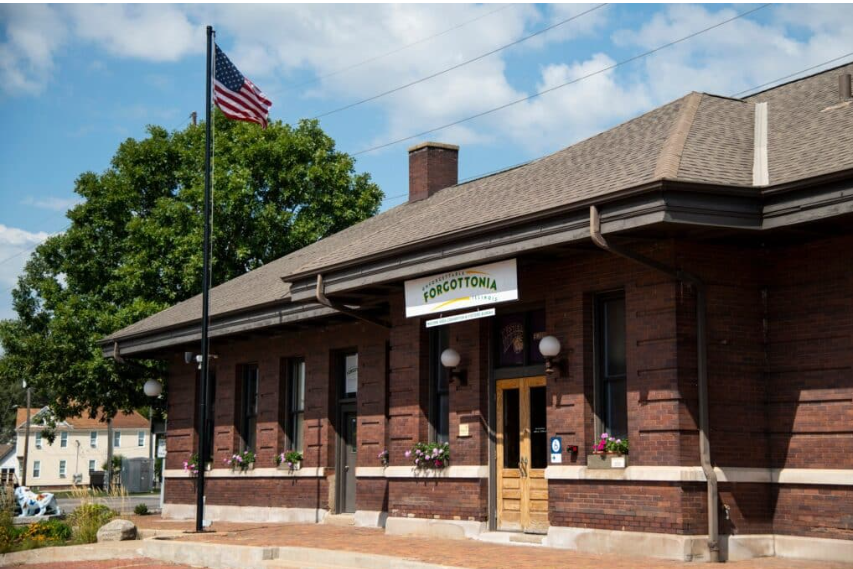
1. Historic Train Depot / Visit Unforgettable Forgottonia Office
Opened in 1913 and designed by architect Walter Theodore Krausch, this beautifully restored brick and sandstone train station remains a vital transportation hub today. Overlooking historic Chandler Park, the depot serves Amtrak’s twice-daily service between Chicago and Quincy and is a central stop for Go West Transit.
The station has seen numerous community-led upgrades, including interior painting by WIU student volunteers and exterior work by local residents. Since 2021, it has also served as the home of the Visit Unforgettable Forgottonia visitors bureau, where travelers can find free regional guides and information.
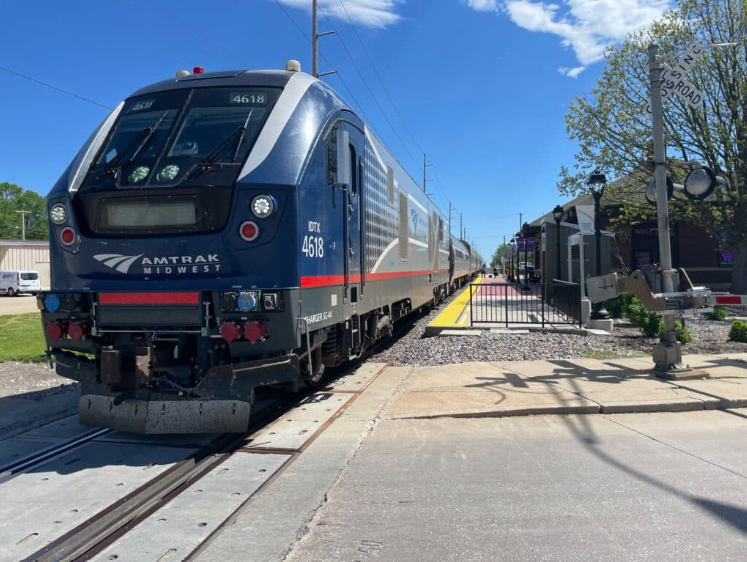
2. Historic Thomas C. Carper Train Depot
Opened in 1913 and designed by architect Walter Theodore Krausch, this beautifully restored brick and sandstone train station remains a vital transportation hub today. Overlooking historic Chandler Park, the depot serves Amtrak’s twice-daily service between Chicago and Quincy and is a central stop for Go West Transit.
The station has seen numerous community-led upgrades, including interior painting by WIU student volunteers and exterior work by local residents. Since 2021, it has also served as the home of the Visit Unforgettable Forgottonia visitors bureau, where travelers can find free regional guides and information.
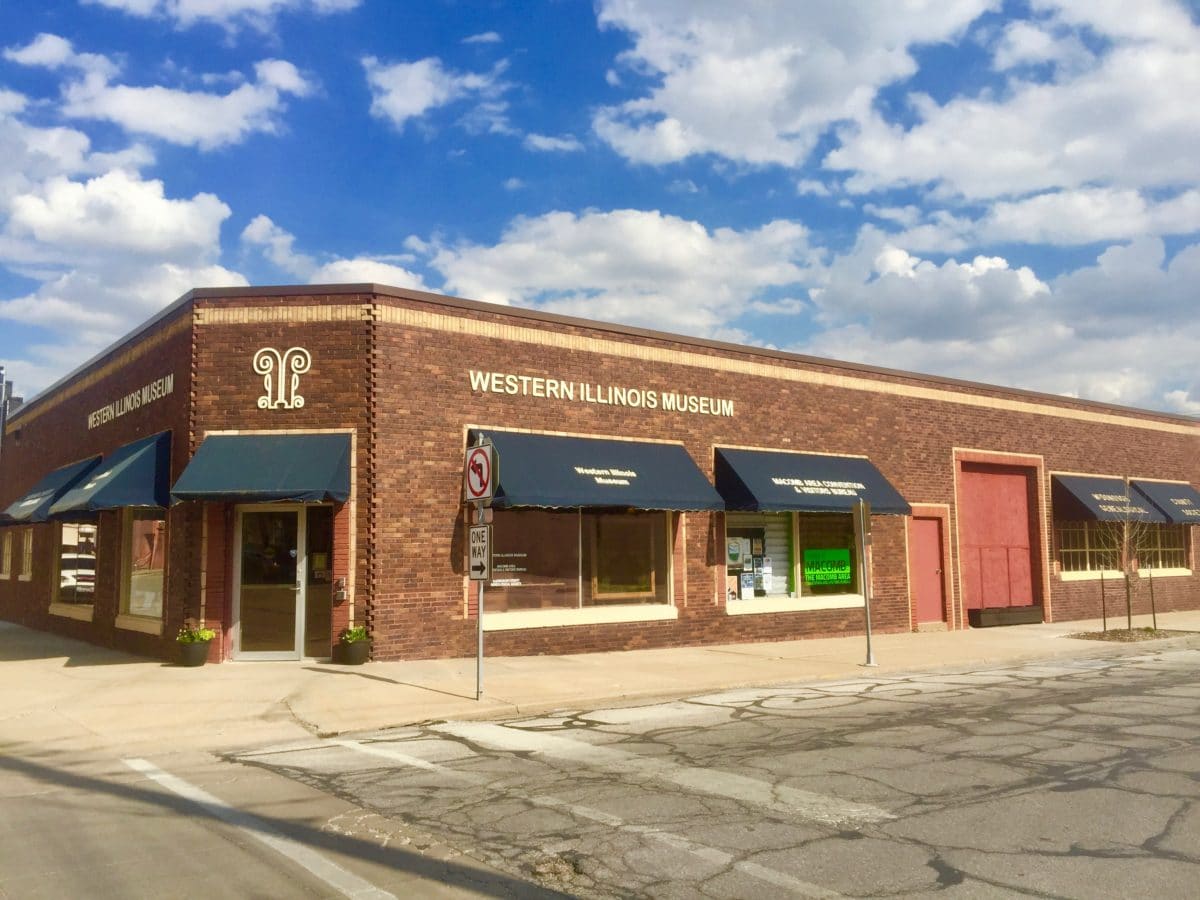
3. Western Illinois Museum
At the Western Illinois Museum, you will explore a rich collection of 6,000+ artifacts, historical documents, and memorabilia that showcase the people, events, and stories that have shaped Western Illinois. The museum highlights the region’s cultural, social, and economic history, offering visitors a window into the diverse heritage of this part of the state. The Western Illinois Museum is a featured stop on the new Illinois America 250 - "Passport to Illinois".

4. Macombopoly: The World’s Largest Monopoly Game
Macombopoly transforms Macomb’s Historic Courthouse Square into a life-size, Monopoly-inspired game board that celebrates both the classic game and its roots in Macomb. Designed in honor of local resident Elizabeth “Lizzie” Magie-Phillips — creator of The Landlord’s Game, which later became Monopoly — the attraction brings her early 1904 board design to life right where its history began.
Players use a state-of-the-art eATLAS mobile app to walk the giant board around the Square, which mirrors Magie’s original layout, even down to the corner where she placed the Jail square, aligning with the historic location of the Macomb Jail. Surrounding the Courthouse lawn are oversized game pieces, including giant spinning dice, Abraham Lincoln’s iconic stovepipe hat, a hybrid Monopoly/Landlord’s Game board, and a life-size sculpture of Lizzie herself, all created by artist Gabe Stevens.
Free and open to the public 24/7, year-round, Macombopoly offers an interactive way to explore downtown Macomb while honoring a groundbreaking local inventor. Download the free app on eATLAS and start the adventure.
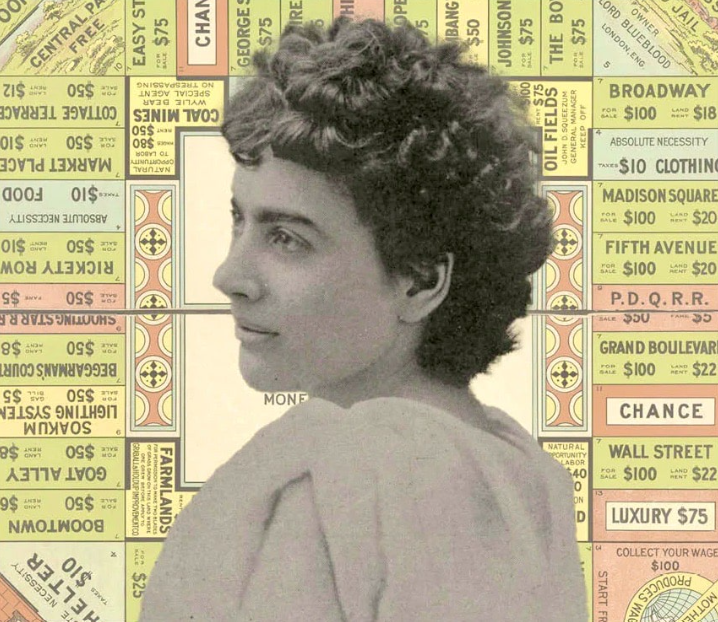
5. Lizzie Magie's Home
Born in Macomb in 1866 to an abolitionist father, Elizabeth "Lizzie" Magie was a pioneering feminist and intellectual who created The Landlord’s Game in 1903. Designed as a tool for social change, her game featured the first "Go to Jail" instruction and a circular board inspired by the streets of downtown Macomb. Though her work was later appropriated and sold to Parker Brothers as Monopoly, Macomb reclaims her legacy through a stainless steel "Macombopoly" statue located in the Courthouse Square.
Visitors can still see her 1864 birthplace at 222 North College Street, where the home’s original barn remains standing. This site and the downtown monument serve as a permanent tribute to Magie’s radical mission to use play as a means of educating the public about economic inequality.
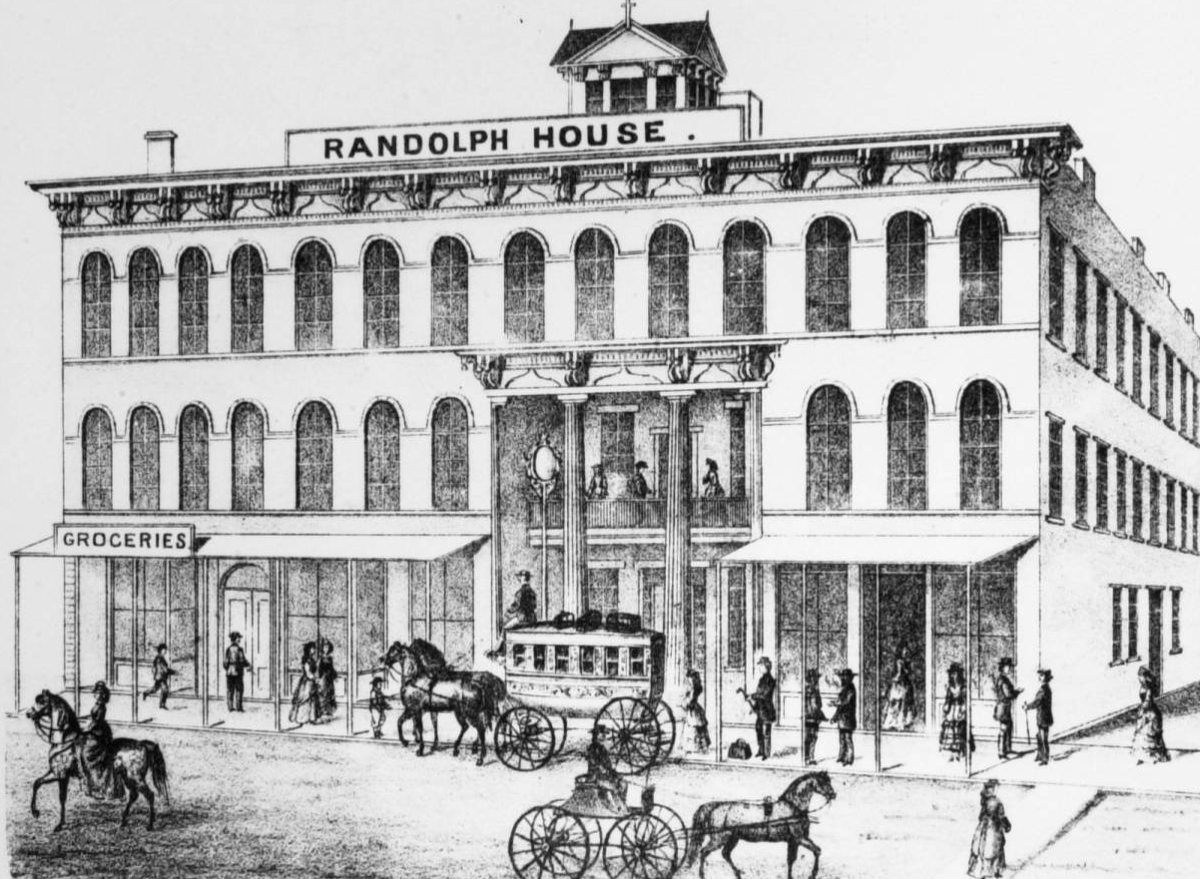
6. The Randolph House Hotel
The Randolph House Hotel was built in 1857 by William H. Randolph, a prominent businessman in Macomb. The hotel was known for its unrivaled elegance. Guests were met at the curb and their horses were taken to a nearby stable, bellhops carried their luggage and ran errands for them, and transportation was provided to and from the newly built train station.
Randolph was the county’s leading Republican, giving him the opportunity to entertain and meet with Lincoln during his visits to Macomb. Lincoln stayed in the Randolph House on two occasions in 1858 – on Wednesday, August 25 and Monday, October 25 – following speeches ahead of his Presidential appointment. After the President’s assassination, the room became a local Lincoln shrine.
This building was, in earlier times, the finest hotel in Illinois between Chicago and Quincy. During the campaign of 1858, Abraham Lincoln was a guest here on at least two separate occasions.
🎩 Hear from Abraham Lincoln about his stay at The Randolph House Hotel here.
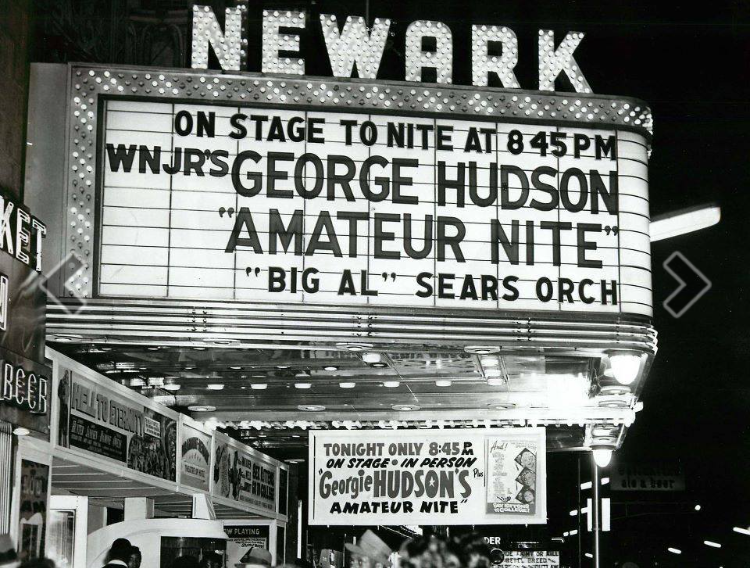
7. Big Al’s Sears House
Albert Omega “Big” Al Sears (1910–1990) was a Macomb, IL native and a pivotal figure in the evolution of American music. A master saxophonist, he performed with jazz legends Fats Waller, Chick Webb, and Lionel Hampton before joining Duke Ellington’s Orchestra as a soloist in 1944. Sears played a crucial role in the birth of Rock ‘n’ Roll; his 1951 hit “Castle Rock” is credited by historians as a bridge between Jumpin’ Blues and the new genre. Beyond performing, Sears was a trailblazing executive at ABC-Paramount, where he broke racial barriers and protected the royalties of artists like Ray Charles. He later founded his own labels and recorded with Aretha Franklin, leaving a legacy as a primary progenitor of R&B, Soul, and Rock ‘n’ Roll.
Macomb hosts the annual Al Sears Music Festival in his honor, which takes place on Sept. 18-20, 2026.
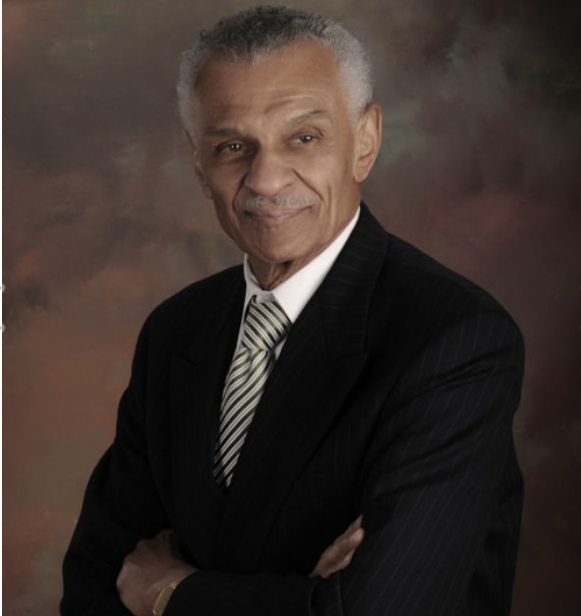
8. C.T. Vivian's House
Rev. Dr. C.T. Vivian, a Presidential Medal of Freedom recipient and close confidant of Dr. Martin Luther King Jr., grew up in Macomb and graduated from Macomb High and Western Illinois University. A key strategist of the Civil Rights Movement, Vivian organized the first Nashville sit-ins and participated in the Freedom Rides alongside John Lewis. He is also credited with creating the educational program that became Upward Bound.
The site of his childhood home is currently being transformed into the C.T. Vivian Center and Park. Nearby, a 75-foot mural honors his journey from a local student to a national icon. Remarkably, Vivian passed away on July 17, 2020—the same day as his lifelong friend and fellow activist, John Lewis.
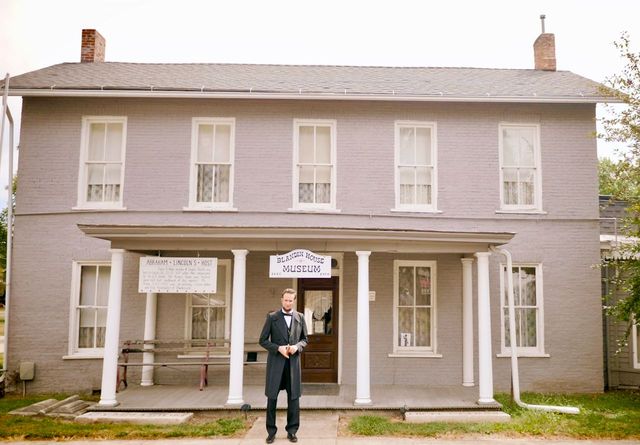
9. Blandin House & Blandin House Museum
The Village of Blandinsville was a bustling place in the 1850. The town once hosted Abraham Lincoln and, today, the Blandin House Museum pays honor to this very visit.
In October of 1858, as Lincoln was stumping throughout Illinois for a seat in the State Senate and in between debating Stephen Douglas, he stayed with postmaster, businessman, and fellow lawyer, Charles R. Hume and his wife, Harriett Blandin. The Hume home sat on Main Street, just over 600 ft. west of the Blandin House. It was destroyed by fire on August 21, 1914.
On May 16, 1970, a group of concerned citizens bought the vacant brick house on the east side of the village park and started a museum to honor founding father, Joseph Blandin and his family. Over the years, the Museum has added many artifacts from the history of Blandinsville.
The Blandin House Museum is located on Chestnut Street, west of the Blandinsville village park.
🎩 Learn more from Abraham Lincoln about the Blandin House and the Blandin House Museum here.
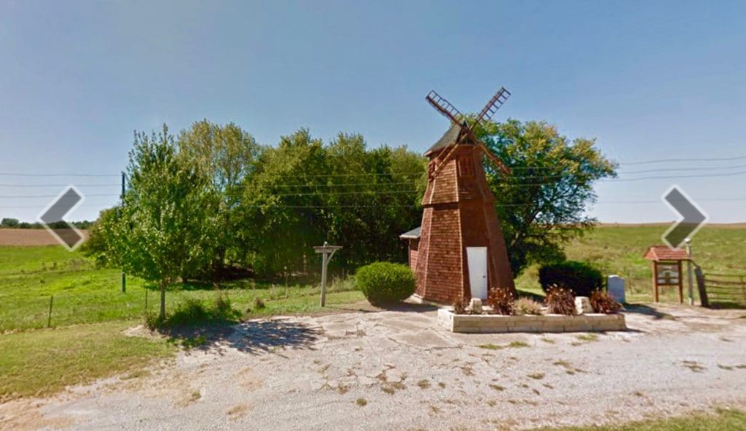
10. Swearingen's Old Mill Tourist Camp Windmill
In 1927, Swearingen’s Old Mill Tourist Camp opened in McDonough County‘s village of Industry, IL. It was an oasis for tourists featuring cabins, a restaurant, a gas station, and this windmill. After the business closed in 1960, all of the structures were torn down except for the iconic Windmill which still stands today.
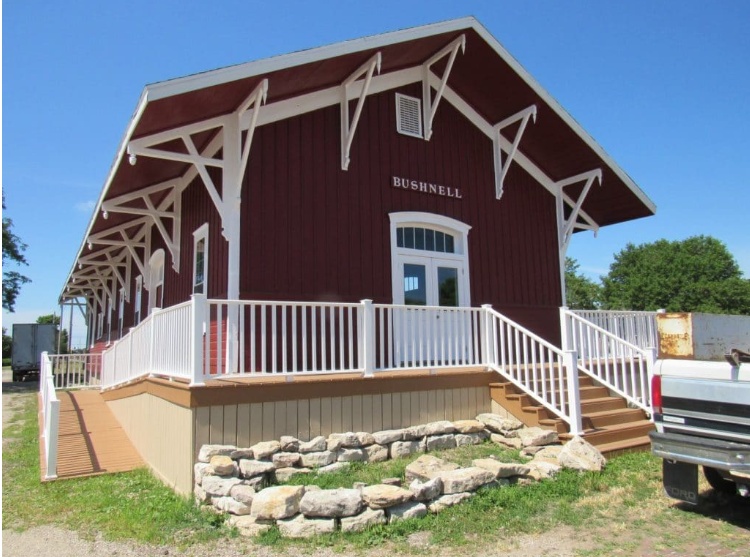
11. Bushnell Freight House Depot
The community of Bushnell has a long history with railroads. The city was founded in 1854 after Northern Cross Railroad built tracks through the area and named the site after the railroad company’s president, Nehemiah Bushnell. Today, freight trains and the Illinois Amtrak line, as they have for over a century and a half, rumble daily through the town and past the historic Bushnell Freight House Depot.
The Bushnell Historical Society has learned through its research that the depot is likely to be the oldest one in Illinois. The exact year of the depot’s construction is undetermined, but it was presumably built in the mid 1800s.
The Bushnell Citizens Coalition has renovated the structure with the goal of making the Bushnell Freight House Depot available as a venue for receptions, gatherings and reunions.
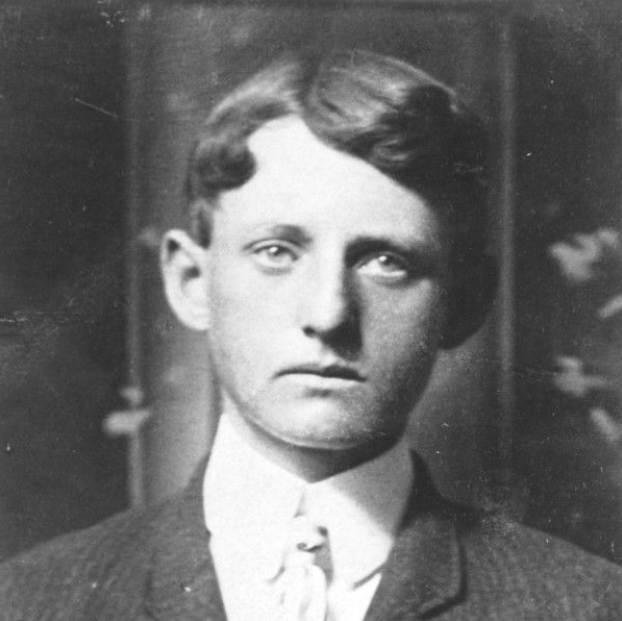
12. "Kelly" Wagle - The Bootlegger - House
Thomas "Kelly" Wagle was McDonough County’s most infamous figure during Prohibition. A local "Robin Hood" with a violent streak, Wagle smuggled liquor from Al Capone’s Chicago syndicate to the region, allegedly even hiding his stash in a local church basement. His most colorful exploit involved hiring "Shoeless" Joe Jackson and other banned "Black Sox" players as ringers for a 1921 Colchester baseball game.
Wagle’s life ended in a 1929 "gangland-style" assassination that remains unsolved. His complex legacy as a generous benefactor and suspected murderer is immortalized in Dr. John Hallwas’s award-nominated book, The Bootlegger.
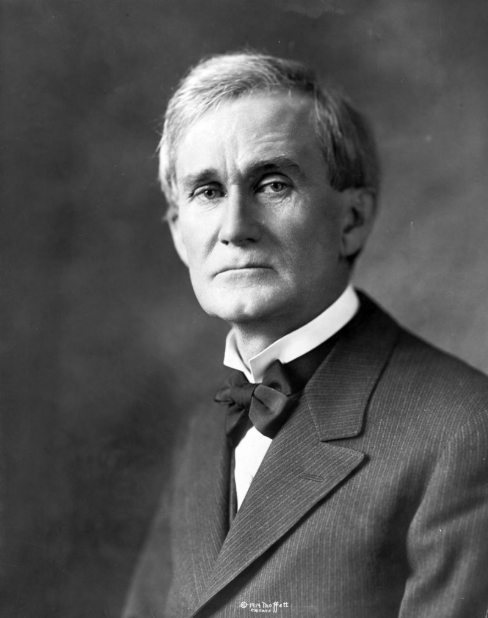
13. Sherman Hall
A prominent lawyer and politician, Lawrence Yates Sherman began his career as a Macomb city attorney and county judge before rising to Speaker of the Illinois House. He played a pivotal role in establishing the Western Illinois State Normal School (now Western Illinois University) in Macomb; the university’s iconic Sherman Hall is named in his honor.
Sherman later served as Illinois Lieutenant Governor and as a U.S. Senator (1913–1921), where he became a national figure for his staunch opposition to the League of Nations. A respected Republican leader, he was even considered a potential presidential candidate in 1916.
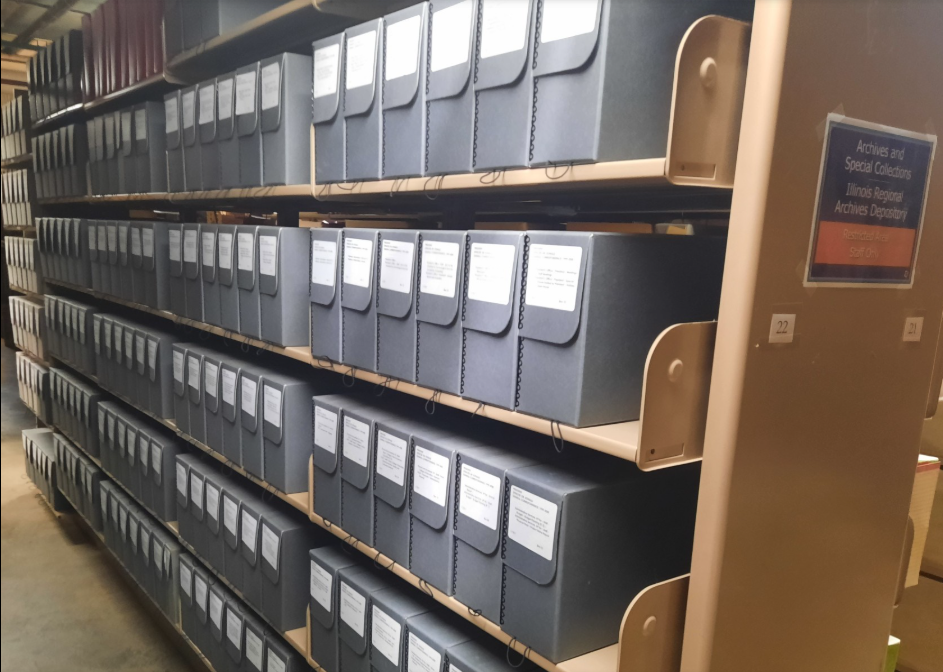
14. Archives at WIU
The University Archives is the official repository for university records. Materials housed in the University Archives include records of administrative offices and faculty and student organizations, publications issued by the university, student newspapers, yearbooks, faculty publications, and masters theses, as well as photographs, oral history tapes, and memorabilia relating to the university. Contents of the University's time capsule, opened September 23, 1999, as part of the University's Centennial Celebration, are now part of the Archives' permanent collection.
The Archival Collection is a record of the university's contribution to knowledge as well as a reflection of its development and operation.
Special Collections documents the cultural, economic, and natural heritage of west-central Illinois. Among the multi-faceted special interest collections are The Center for Regional Authors (focused on books and papers by and about John Hay, Edgar Lee Masters, Carl Sandburg, and dozens of other noted writers), the Baxter-Snyder Center for Icarian Studies (centered on early Nauvoo), and the Center for Hancock County History (which includes the extensive Mormon Collection). Publications of the Decker Press (the Midwest's first poetry publisher), and a large number of Civil War Manuscripts from Illinois are significant features of Special Collections as well. Also included are collections related to famous singer and actor Burl Ives (a native of downstate Illinois), noted African-American civil rights activist C. T. Vivian (who was raised in Macomb), and prolific, distinguished historian John Hallwas (who produced thirty books, hundreds of articles, several plays, and many educational programs focused on Illinois) among many other figures. A vast amount of regional materials, such as county and town histories, oral history tapes, diaries, letters, maps, photographs, organizational records, and newspaper clippings reflecting life as it once was, and now is, in west-central Illinois are also in Special Collections.
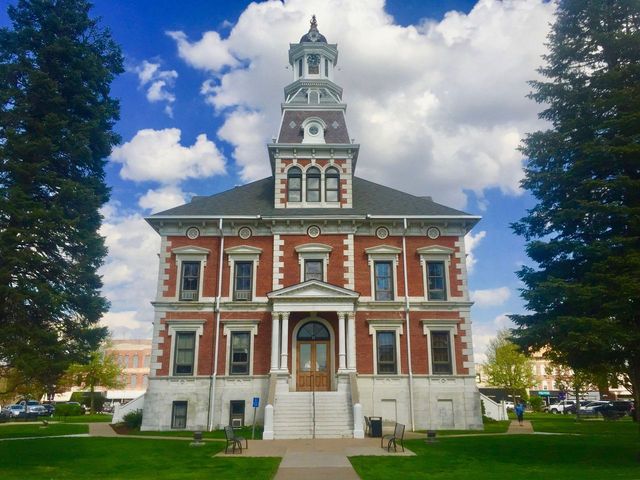
15. McDonough County Courthouse
McDonough County’s first courthouse was built of logs in 1831 and cost $69.50. It was located at the northeast corner of the square. The second courthouse was built in 1835 and stood on the same grounds as the current courthouse. It was two stories and had a stone foundation, was made of brick with a cupola that sat in the center of the building. In 1858 an ambitious politician by the name of Abraham Lincoln spoke to members of the community from the Courthouse on two separate occasions, one of them in the pouring rain to a crowd of more than 4,000 spectators.
The current courthouse was constructed in 1871. Noted governmental architect Elijah E. Myers designed the building in the Second Empire style and the courthouse is one of the few remaining buildings of its type in the county.
The building houses the County Clerk, Treasurer and State’s Attorney’s Office among others. The courthouse was added to the National Register of Historic Places in 1972. In the late 1970s, the county rehabilitated the building to restore its original exterior.
Established in 1830, McDonough County is named for Commodore Thomas McDonough who led a successful battle against the British on Lake Champlain in the War of 1812.
The McDonough County Courthouse is one of 10 sites that gave McDonough County Abraham Lincoln National Heritage Area status and can also be visited as part of Macomb‘s Looking For Lincoln Self-Guided Tour.
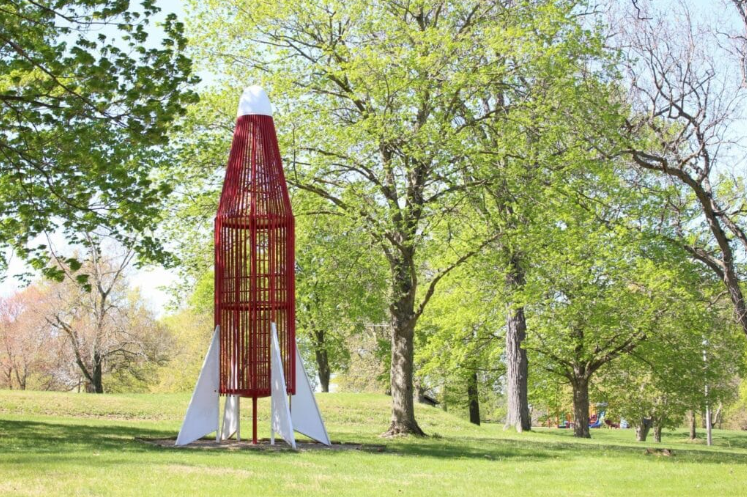
16. Space Rocket Slide - Glenwood Park
The Space Rocket Slide in the Macomb Park District‘s bucolic Glenwood Park is a rare and historic piece of unique Cold War era playground equipment designed to inspire interest in space exploration.
The rocket holds a special place in history. It’s an icon of technological progress that’s both revered and feared at the same time. During the sixties of the last century, the United States and the Soviet Union was gripped by the space-age fever, and the rocket emerged as the fundamental symbol of the space rivalry. Throughout America, as well as the Eastern bloc, rocket shaped structures began popping up across children playgrounds to foster curiosity and excitement about the space race among kids. Aside from rockets there were other fixture resembling various space-age equipment such as satellites, radar tower, planets and even submarines that kids can climb, swing and slide from.
The “Space Rocket” at Glenwood Park in Macomb, is a nearly three story red rocket that when installed in the 1960s had an attached metal slide. It was decommissioned in 2011 due to potential safety hazards. Although the slide was removed, the rocket part was saved and now serves as a park sculpture and historic piece of artwork.
A similar Rocket Slide from the Cold War era was also featured in 'Stranger Things' recently.
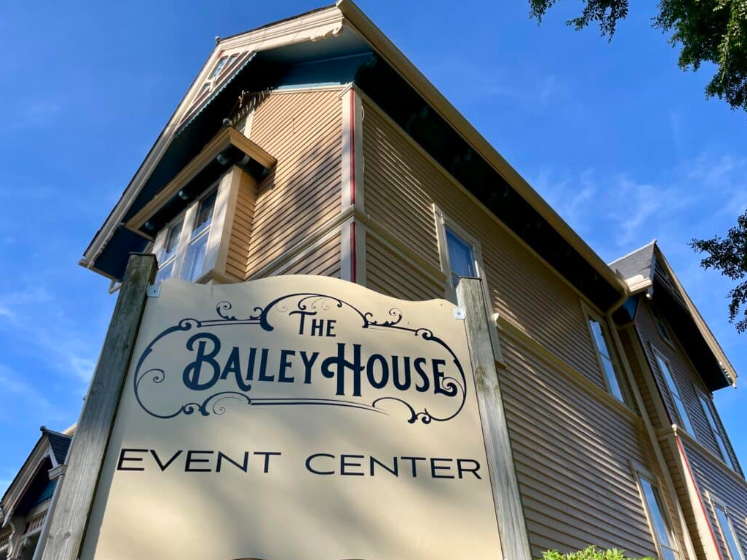
17. Bailey House Event Center
The historic Bailey House was built in 1887 by William S. Bailey, founder and first president of the Union National Bank of Macomb, Illinois. The house is an Eastlake style Victorian structure that features a grand foyer with large elaborate cherry staircase, a reception parlor, drawing and dining rooms, library and kitchen. Also displayed in the interior are hardwood and parquet floors, wood and iron fireplaces, and elegant lighting fixtures.
In 1982 the Bailey House property was generously donated to the McDonough County Historic Historical Society. Today this beautifully restored, historic treasure is an event center available to rent for receptions, family gatherings or private events.
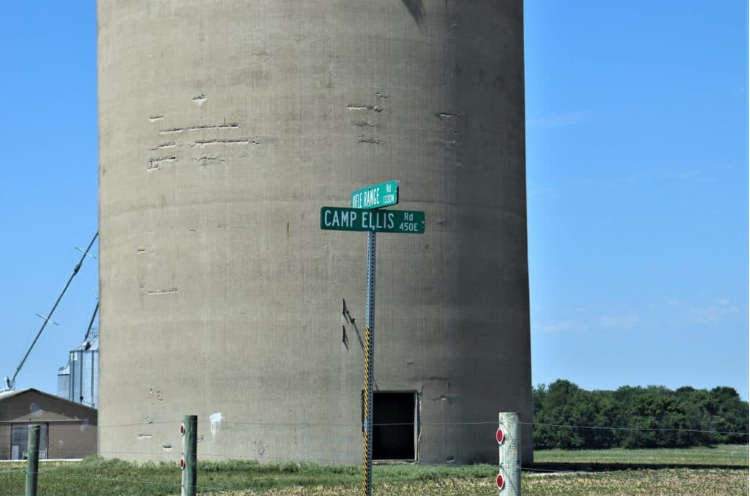
18. Camp Ellis – Former WWII POW Camp / The Easley Pioneer Museum
Located near Ipava, the 18,000-acre Camp Ellis was a massive WWII Army training center and POW camp that once housed 25,000 troops and 5,000 German prisoners. Built in 1942 due to its proximity to the Galesburg rail hub, it functioned as a "city unto itself" with over 2,200 buildings.
Today, visitors can spot historic remnants like cement water towers, rifle range walls, and chimney stacks. A comprehensive collection of camp artifacts is preserved at the Easley Pioneer Museum in Ipava (Open April–Nov, Tue/Fri, 10 a.m.–4 p.m.).
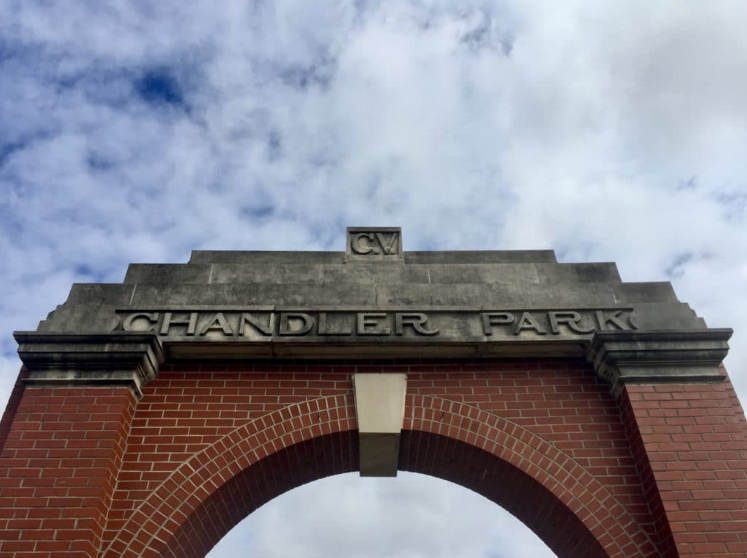
19. Chandler Park
Established in 1893 through the benevolent donation of Macomb business man C.V. Chandler, historic Chandler Park sits at the heart of Macomb, in the center of McDonough County. With it’s original brick sidewalks, iconic gazebo and century old trees, this scenic park is home to several historic monuments and host to many of the towns festivals and events.
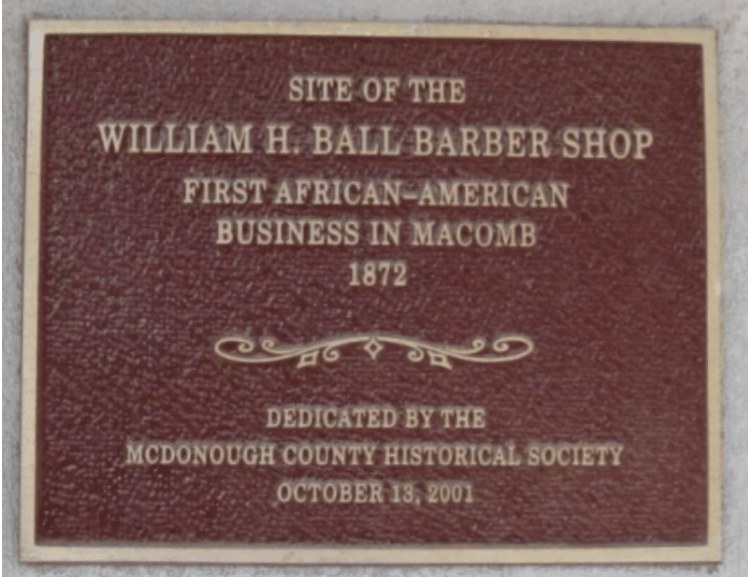
20. Willian Ball Barbershop - First Black Business in Macomb
This location marks the site of Macomb’s first Black-owned business, a barber shop opened in 1872 by James B. Fields and William H. Ball.
James B. Fields: Born into slavery in Missouri, Fields escaped to Illinois in 1862. After arriving in Macomb in 1866, he trained as a barber and later became a renowned Baptist preacher and orator. He founded Macomb’s first Black church in 1875 and gained national fame for his lectures challenging the agnostic Robert G. Ingersoll.
William H. Ball: A Pennsylvania native, Ball was a dedicated local businessman and family man whose son also apprenticed in the trade.
Together, Fields and Ball established a landmark of Black entrepreneurship and community leadership in the heart of Macomb.
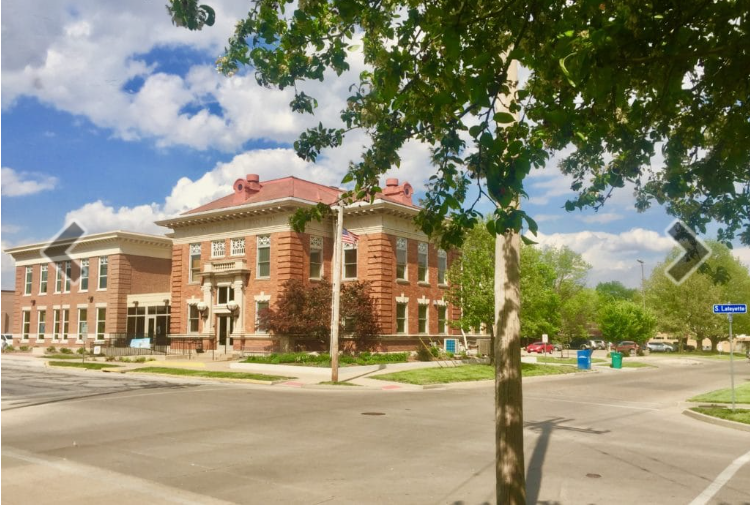
21. Andrew Carnegie Macomb Public Library
The Macomb City Library was formed by action of the City Council. The Library was organized on November 10, 1881 when the mayor appointed a Library Board of Directors of nine members. The first library opened on April 8, 1882 on the upper floor of the Stocker Building at 109 South Side Square.
In 1883 when the City of Macomb purchased the building at 108 South Lafayette Street, the Macomb City Library was moved to the second floor. On October 28, 1904 the Macomb City Public Library opened in a new Andrew Carnegie Building at 235 South Lafayette Street. The Macomb Library building is one of 106 libraries in Illinois that were built from 105 grants (totaling $1,661,200) awarded by the Carnegie Corporation of New York from 1903 to 1914.
The Children’s Library was opened to the public on June 20, 1980. A hallway and two rooms were added to connect the two buildings on July 3, 1983.
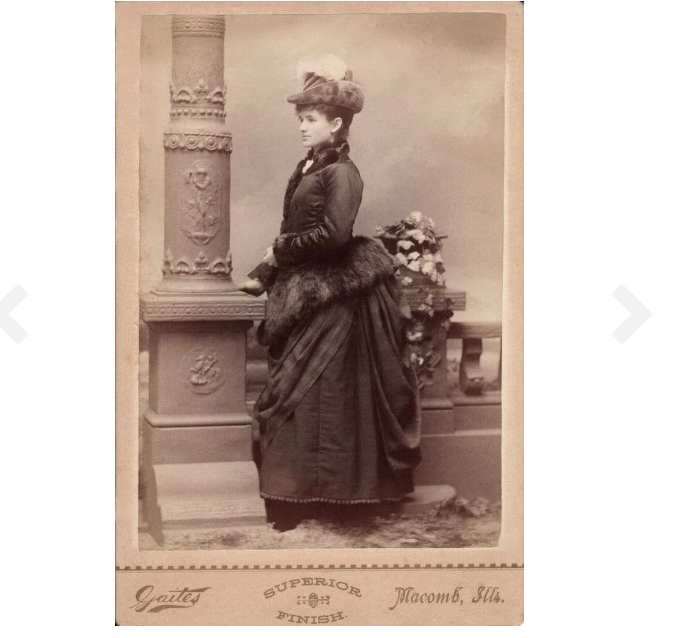
22. Laura B. Gates' Photography Studio
Laura B. Gaites was born in Macomb in 1861. Twenty years later she married H. William Gaites, who soon opened a photography studio in the 200 block of North Randolph Street. She worked with him as the first female photographer in the area, and at that time glossy “cabinet card” photographs were popular. By the 1880s, children were frequently photographed, an indication of the growing attention they were beginning to receive in American culture.
The Gaites studio had several elaborate photographic settings, including one for graduation pictures. Partly for that reason, the Gaites studio was the most successful photography business of that era, and Laura Gaites became a well-known photographer. When her husband died in 1917, she continued in the busi-ness. By the time she died in 1952, she had been a photographer for seventy-one years and, just of children alone she had taken some 35,000 images.
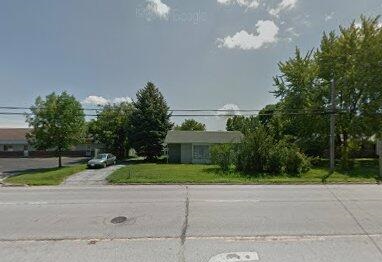
23. Lustron Homes
This Lustron Homes Tour highlights a rare chapter of post–World War II American housing innovation, of which Macomb took part in. Developed by the Lustron Corporation under inventor Carl Strandlund, these prefabricated enameled steel homes were designed to be durable, low-maintenance, and modern for returning G.I.s. Although production ended in 1950, more than 2,000 Lustron homes remain today, with several listed on the National Register of Historic Places. Five can be seen in Macomb, right in the heart of Unforgettable Forgottonia.
Visit this link to see more details including addresses and photos of all the Lustron Homes in Macomb.
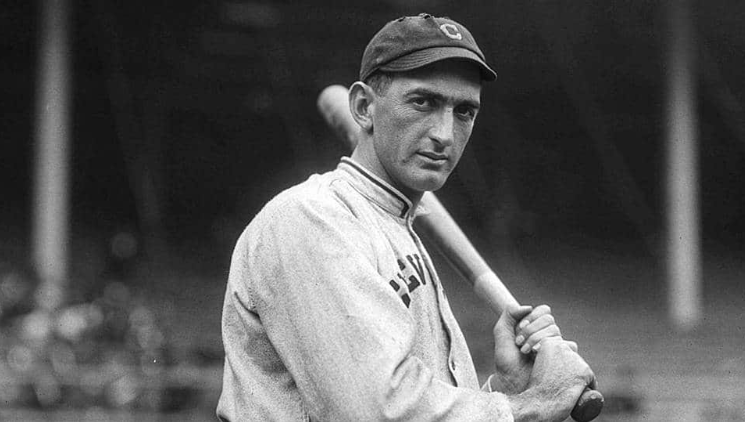
24. Shoeless Joe Jackson & Baseball's “Black Sox” in McDonough County
In 1921, the intense baseball rivalry between Macomb and Colchester culminated in a championship game that felt like a scene from Field of Dreams. While Macomb was the established county seat, the mining town of Colchester had a secret weapon: local bootlegger and Al Capone associate Henry “Kelly” Wagle. Seeking an edge in the decisive fifth game of the series, Wagle used his Chicago connections to recruit ringers from the infamous "Black Sox" scandal, who had just been banished from Major League Baseball for fixing the 1919 World Series.
Just five weeks after the "Trial of the Century," a mysterious car arrived at the Macomb fairgrounds. Out stepped "Shoeless" Joe Jackson—the legendary hitter who set a rookie batting record of .408—along with teammates Eddie "Knuckles" Cicotte and "Swede" Risberg. Despite fierce protests from the Macomb side, the disgraced stars were allowed to suit up for Colchester. Jackson, known for his incredible speed and 400-foot throws, joined his fellow banned teammates to dominate the local competition.
To no one’s surprise, the professional talent proved overwhelming. With the Major League icons on the field, Colchester shut out Macomb with a final score of 5-0. This remarkable afternoon remains one of the most legendary chapters in the history of McDonough County, cementing the region's reputation as "Unforgettable Forgottonia".
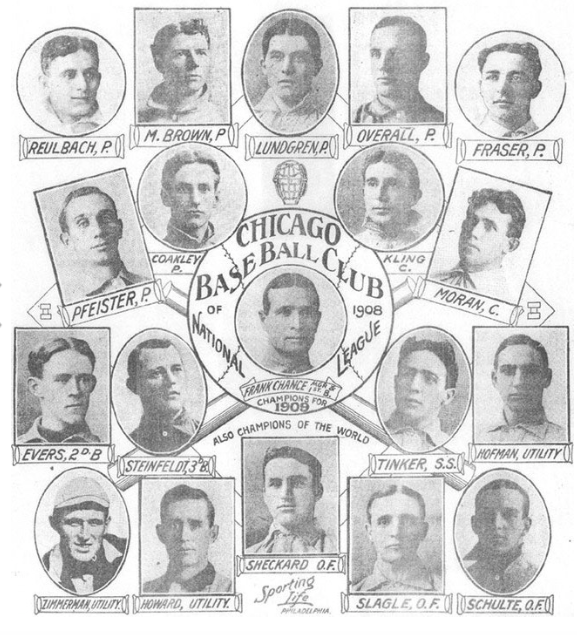
25. When The 1908 World Champion Chicago Cubs Played In Forgottonia
In 1909 and 1910, the reigning World Champion Chicago Cubs traveled to Macomb to play exhibition games against the Macomb Potters, a Class D minor league team. The first matchup in June 1909 was a major event for the region, drawing nearly 3,000 fans who paid a significant $1.00 admission fee to see the Cubs’ regular starting lineup. The Major League stars lived up to their reputation, shutting out the local Potters 6–0 and splitting the substantial gate profits.
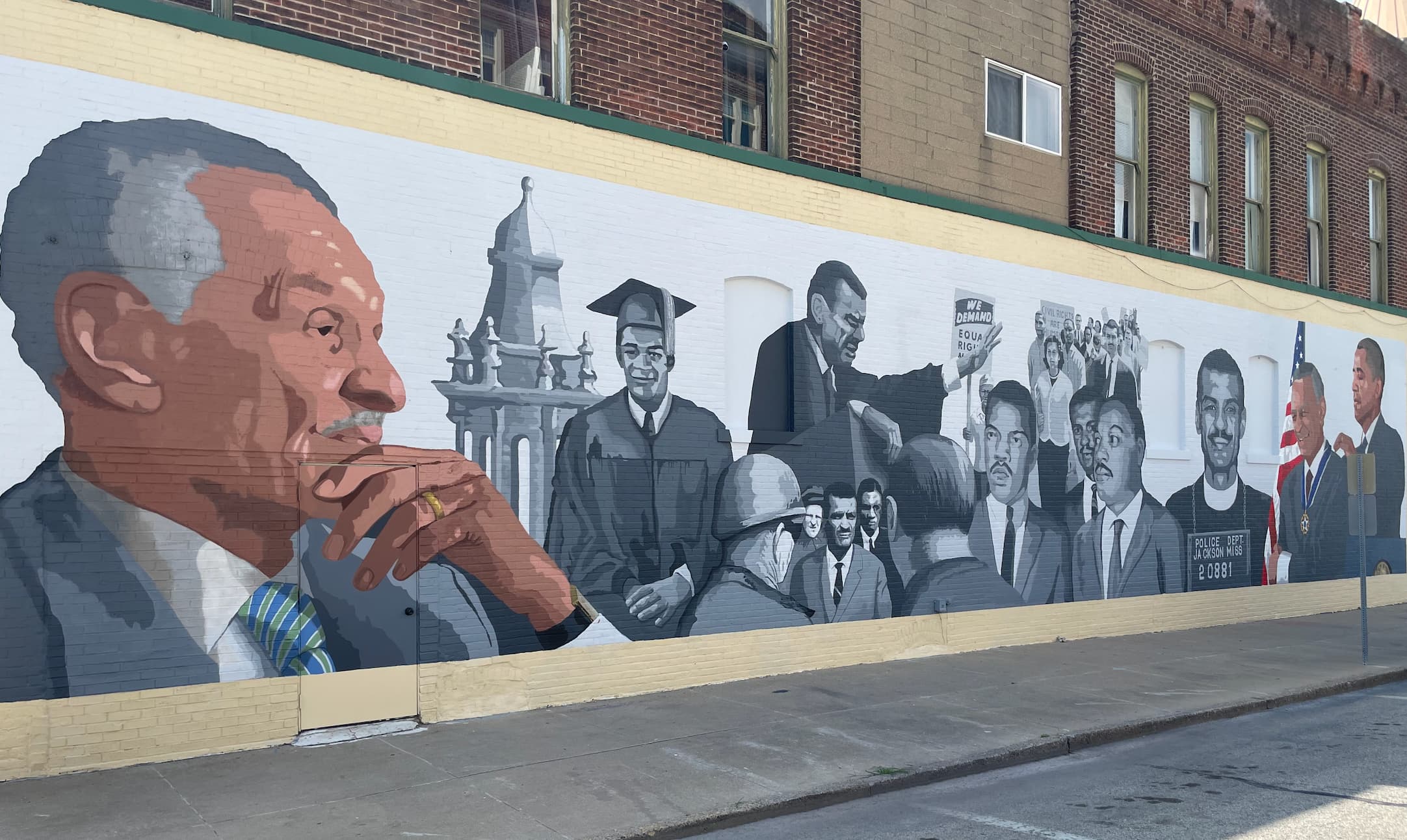
26. Rev. C. T. Vivian: Life of a Servant Leader Mural
In recognition of one of Macomb’s greatest sons, the Macomb Area Convention & Visitors Bureau partnered with C.T. Vivian Project Foundation of Macomb founder and director Byron Oden-Shabazz and artist and former WIU Professor of Art, Michael Mahoney, to honor civil right pioneer Rev. Dr. C. T. Vivian.
At 18 feet high and nearly 75 feet long, Rev. C. T. Vivian: Life of a Servant Leader is McDonough County’s largest mural.
The work, which is displayed on the northern wall of the 135 N Randolph building, depicts Dr. Vivian late in life looking over the course of his storied lifetime from a young man graduating from Macomb High School and Western Illinois University through his varied experiences as a Reverend and leading activist in The Civil Rights Movement.
He worked shoulder to shoulder with Rev. Martin Luther King and lifelong friend Rep. John Lewis to receiving the Presidential Medal of Freedom from Barrack Obama.
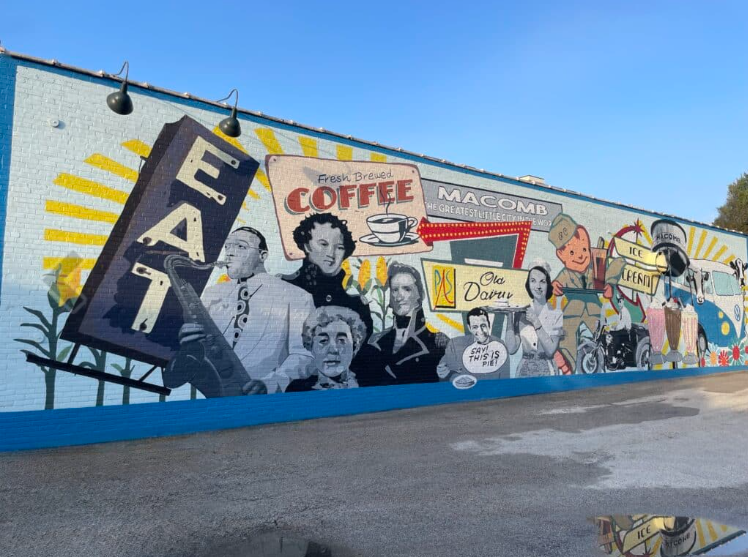
27. Old Dairy Mural + Big Al Sears
At nearly 15 feet high and stretching over 60 feet long, stands a whimsy of colorful display on the north side of the Old Dairy Cafe.
WIU Professor of Art, Bill Howard, along with WIU Art Professor Emeritus, Mike Mahoney, created a dazzling montage that pays tribute to both the history of Macomb and the Old Dairy itself.
Along with vintage pop culture images relating to food, diners and notable natives from Macomb, this mural features “Big” Al Sears, local jazz music legend and Rock & Roll Progenitor.
Albert Omega “Big” Al Sears (1910–1990) was a Macomb, IL native and a pivotal figure in the evolution of American music. A master saxophonist, he performed with jazz legends Fats Waller, Chick Webb, and Lionel Hampton before joining Duke Ellington’s Orchestra as a soloist in 1944. Sears played a crucial role in the birth of Rock ‘n’ Roll; his 1951 hit “Castle Rock” is credited by historians as a bridge between Jumpin’ Blues and the new genre. Beyond performing, Sears was a trailblazing executive at ABC-Paramount, where he broke racial barriers and protected the royalties of artists like Ray Charles. He later founded his own labels and recorded with Aretha Franklin, leaving a legacy as a primary progenitor of R&B, Soul, and Rock ‘n’ Roll.
Macomb hosts the annual Al Sears Music Festival in his honor, which takes place on Sept. 18-20, 2026.
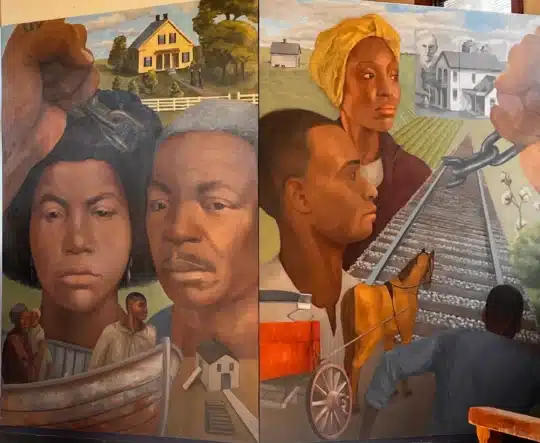
28. Freedom’s Trail Mural: Underground Railroad in McDonough County
A new mural at Macomb Amtrak Station, which was unveiled on November, 7 2025, honors local Underground Railroad history and the bravery of freedom seekers and their supporters in the region. The mural, created by renowned local artist and Western Illinois University Professor Emeritus Michael Mahoney, will honor the stories of freedom seekers who passed through Western Illinois on their way to freedom in Canada.
The mural is painted on large masonite panels and features imagery of local families—such as the Blazers and the Allisons—whose homes served as safe havens for those escaping slavery. The local train station was chosen for the mural because, by the mid-1800s, many freedom seekers stowed away on trains through Macomb, making it a powerful setting to tell this story.
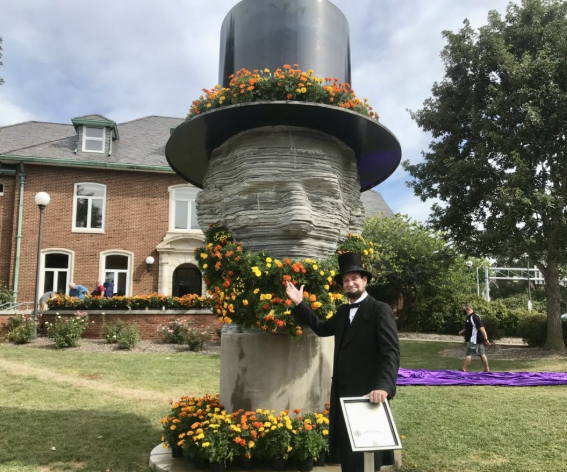
29. Living Lincoln Topiary Monument
The Living Lincoln Topiary Monument is a 16 foot high by 8 foot wide bust of our 16th President, Abraham Lincoln. It’s mixed media construction of durable cast stone and steel features a unique topiary aspect in which the 16th president’s beard consist of real living flowering plants and greenery, making it the only sculpture of its kind in the world!
The monument was designed as the centerpiece of Unforgettable Forgottonia‘s Looking For Lincoln Self-Guided Tour, which illustrates Abraham Lincoln‘s long and significant connection to Macomb and McDonough County.
As President of the United States, Abraham Lincoln was monumental in the fight to end slavery in the nation. His most significant steps toward ending the institution were the Emancipation Proclamation and his support for the 13th Amendment. Lincoln's presidency (1861-1865) coincided with the later years of the Underground Railroad's operation, and his Emancipation Proclamation in 1863 marked a turning point in the fight for freedom.
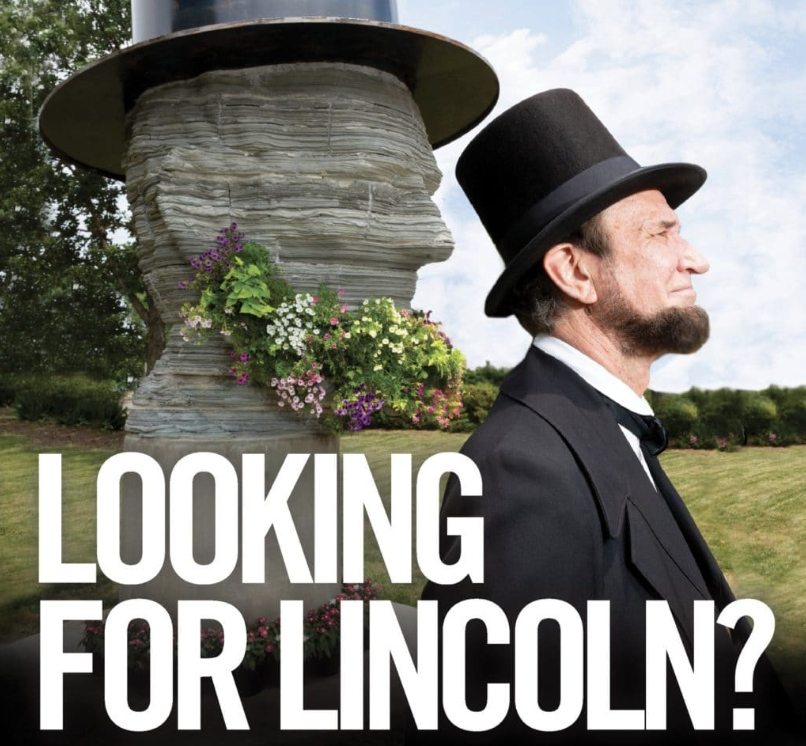
30. Looking for Lincoln Self-Guided Tour
Through the Looking For Lincoln offices in Springfield, IL and the U.S. National Parks Service, Macomb celebrates it’s designation as an Abraham Lincoln National Heritage Area by way of it’s Looking For Lincoln Self-Guided Tour. This unique attraction allows users to experience 10 significant sites throughout Unforgettable Forgottonia‘s Macomb and McDonough County directly related and pertaining to Abraham Lincoln, his remarkable connection to this Forgottonia community, and his contributions to the Civil Rights Movement.
Individual markers designate every one of the 10 Macomb Looking For Lincoln sites, which include specific QR codes that direct history seekers to detailed, online information on the particulars of each notable location, featuring in depth history, photos, maps and video of “Abe Lincoln” himself giving “first hand” descriptions of the sites.
The LFL marker tour includes the The Living Lincoln Topiary Monument, McDonough County Courthouse, The Randolph House, Oakwood Cemetery, The Blandin House Museum, Civil War Monument, The Wm. Painter Pearson Photography Studio site, as well as other significant area Lincoln historic sites.
Find a printable brochure for our Looking For Lincoln Self-Guided Tour and Living Lincoln Topiary Monument here.
31. Bill Thorp Park
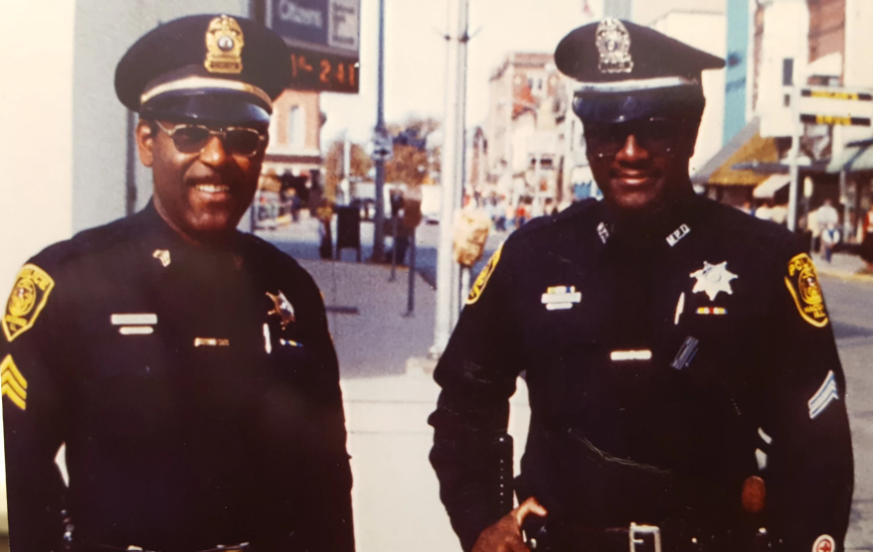
The William H. Thorpe Memorial Park on 1200 and 1300 blocks of East Pierce Street celebrates the life and community impact of Bill Thorpe, the first Black police officer to serve in the Macomb Police Department. The Park also adds a needed greenspace and neighborhood amenity in the northeast area of town, improving the quality of life for residents.
The story of Mr. Thorpe is inspiring and important. Bill Thorpe, born in 1933, grew up in Macomb and graduated from both Macomb High School and Western Illinois University. He served in the military from 1951-1955, including service in the Korean War. Thorpe joined the Macomb Police Department in 1961, becoming the City of Macomb and McDonough County’s first Black police officer. Thorpe was promoted to sergeant and served as an interim lieutenant.
Thorpe’s unwavering commitment to fairness and justice for all, regardless of race or ethnicity, endeared him to both Black and White communities. His exceptional communication skills and ability to bridge cultural divides made him a valuable asset in Macomb’s diverse community. Thorpe’s dedication to public service extended beyond his role as an officer; his selflessness and willingness to lend a helping hand earned him admiration and appreciation from all corners of the community.
Thorpe’s determination and perseverance in the face of discrimination and inequality served as a powerful example for his family and community, demonstrating the transformative power of one’s actions on the lives of those around them. His legacy will continue to inspire and encourage individuals of all backgrounds, reminding us of the limitless potential of the human spirit.
32. Olympic Trackstar Lee Sculpture
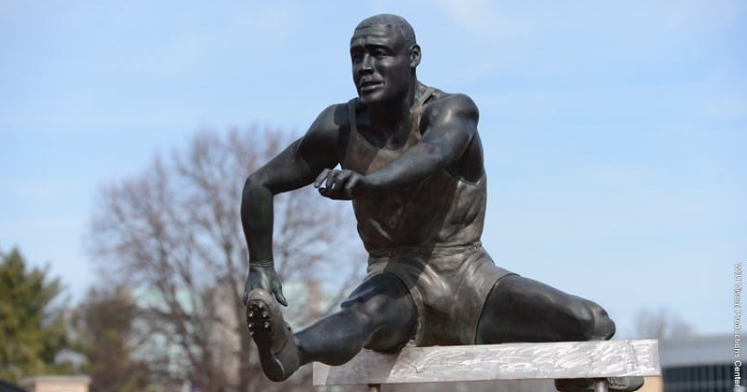
Lee Calhoun is an international track and field legend, a two-time Olympic gold medal winner and former Western Illinois University head track coach. There is a bronze sculpture of him leaping on display at the Hansen Field Track.
Calhoun won the AAU championships in 110 m hurdles in 1956 and 1959 and in 120 yd hurdles in 1957. Calhoun is the first athlete to win the 110m hurdles at two different Olympics. At the 1956 Summer Olympics Calhoun surprisingly improved his personal best in 110 m by almost a full second in a final. He ran 13.5 to win the gold medal, edging teammate Jack Davis with a lunge that just got his shoulder across the line in front. He had learned the maneuver from Davis.
Calhoun was suspended in 1958 for receiving gifts on Bride and Groom, a television game show, and seemed to be past his prime for the 1960 Summer Olympics. But shortly before the Rome Olympics, he tied the world record of 13.2 and went to the Olympic Games as a main favourite. In the final, he won in 13.98, beating teammate Willie May by 0.01 seconds.
After retiring from competition, he became a college track coach, first at Grambling State University, then at Yale, and finally at Western Illinois University. He was an assistant Olympic coach at the 1976 Summer Olympics.
He was elected to the United States National Track and Field Hall of Fame in 1974. Lee Calhoun passed away in Erie, Pennsylvania, aged 56.

33. Rodney Harrison (NFL Super Bowl Championship)
Rodney Harrison is another notable Macomb native thanks to his legendary athletic career, which began at Western Illinois University (1991–1993). A standout Leatherneck, Harrison still holds the school records for career tackles (345) and single-game tackles (28), earning First-Team All-American honors before being drafted into the NFL in 1994.
Over 15 professional seasons with the San Diego Chargers and New England Patriots, Harrison became a two-time Super Bowl champion and a three-time All-Pro safety. He made history as the first NFL player to record 30 sacks and 30 interceptions in a career. Following his 2009 retirement, he became a prominent sports analyst, most notably for NBC’s Football Night in America.
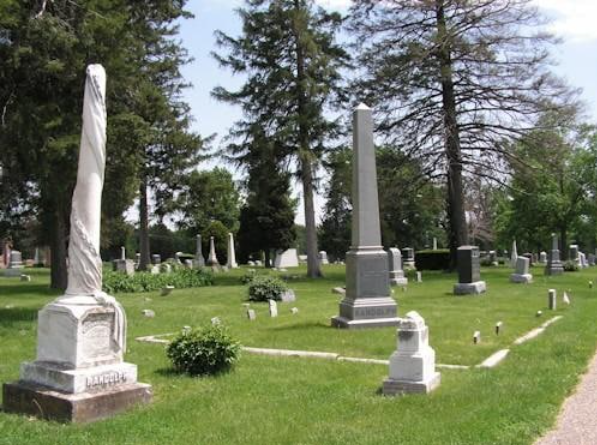
34. Oakwood Cemetery
Created in 1857, Oakwood Cemetery is remarkably historic. Its founder, William H. Randolph, a former sheriff and state legislator, was the leading Abraham Lincoln supporter in McDonough County. With 14,000 burials, Oakwood is by far the largest cemetery in McDonough County.
Oakwood was a celebrated burial place for Civil War soldiers. There are over 300 graves of men who served in that nation-redefining war.
Among the many noted graves are those of early county organizers and Macomb founders James Clarke and James Campbell; several Underground Railroad conductors in the Allison and Blazer families; noted business leaders including William H. Ball, Macomb’s first black business owner, and community activists like C. V. Chandler and Mary Ewing; crusading humanitarians Rose Jolly and Josie Westfall; early bacteriologist Ruth Tunnicliff, who developed the first inoculation for measles; Western Illinois University presidents Alfred Bayliss, Walter P. Morgan, and Dr. Frank Beu; noted Leatherneck coaches Ray “Rock” Hanson and LeRoy “Stix” Morley—to name but a few.
The Oakwood Cemetery is one of 10 sites that gave McDonough County Abraham Lincoln National Heritage Area status and can be visited as part of Macomb‘s Looking For Lincoln Self-Guided Tour.
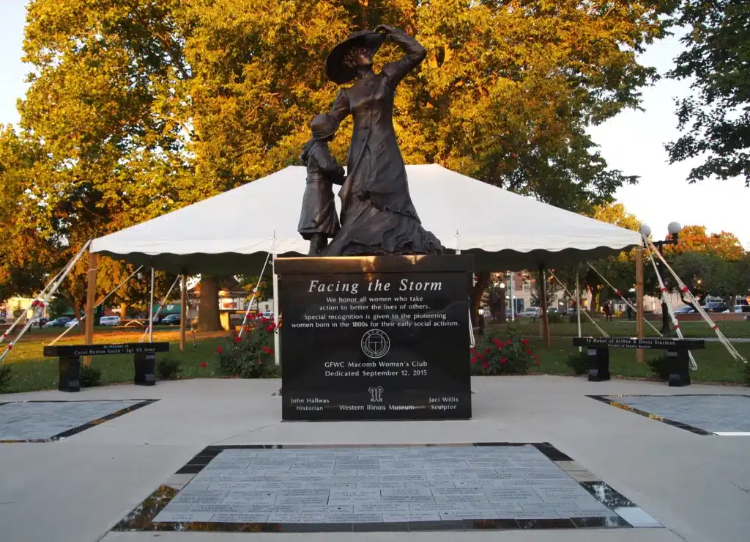
35. "Facing the Storm" Memorial
Chandler Park in downtown Macomb contains numerous statues many honoring deserving citizens including a memorial dedicated to the pioneering women of social activism in McDonough County.
Dedicated in 2015, “Facing the Storm” created by the Women’s Memorial Committee which is part of the GFWC Macomb Women’s Club, which worked on the project with assistance from the Western Illinois Museum.
The statue depicts a woman with a girl who is holding a cat. They’re dressed in clothing from the early 1900s, which was a time when women fought for and gained more rights. The bronze statue was created by Peoria-based artist Jaci Willis.
The statue memorializes the contributions of eight women with brief biographies explaining their work:
Josie Westfall, who raised money to create, expand, and operate the McDonough County Orphanage, serving as matron for 30 years, ultimately caring for some 500 children.
Dr. Ruth Tunnicliff, a published medical researcher on diseases like scarlet fever, diphtheria, and meningitis, discovered the cause of measles and created the first serum for its prevention.
Sadie “Mother” Moon, who continually reached out to provide food for the homeless, helped mothers care for their sick children, wrote regularly to local servicemen, and became an icon of neighborly concern.
Dr. Elizabeth Miner, the county’s first female physician, treated impoverished patients, promoted safe childbirth practices, and became a leader in the Illinois Medical Society.
Rose Jolly, who organized and led the county’s first social organization, the McDonough County Humane Society, devoted to the protection of children and animals.
Rebecca Everly, who established a trust to build the county’s first retirement facility for the elderly with funds from the trust helping pay expenses. Funds were also provided to acquire land for Everly Park.
Lida Crabb, who used her newspaper column, “A Day at a Time,” to promote sympathetic appreciation for others and to foster a sense of belonging while also supporting a variety of community causes.
Clara Bayliss, who crusaded for improved parenting and better home lives for children through writings, talks, and organizational work, and raised funds for the county orphanage.
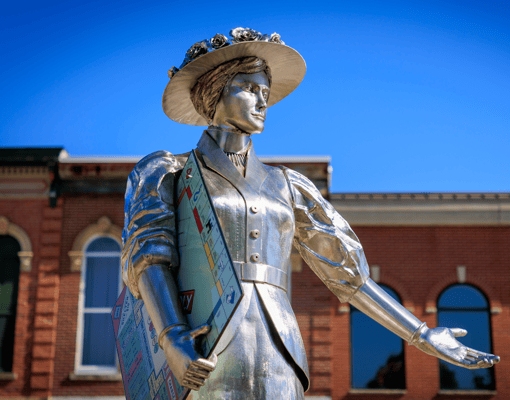
36. Elizabeth "Lizzie" Magie Sculpture
Located on the Historic Macomb Courthouse Square, this stainless steel sculpture honors Elizabeth "Lizzie" Magie, the Macomb-born visionary who invented the game that was the precursor to Monopoly. Born in 1866 to an abolitionist father who traveled with Abraham Lincoln, Magie was a pioneering feminist, actress, and poet. She designed The Landlord’s Game in 1903 to educate the public about economic inequality, featuring the now-iconic "Go to Jail" instruction and a circular board inspired by the very streets of downtown Macomb.
Though her creation was later appropriated and sold to Parker Brothers by Charles Darrow, this monument reclaims her legacy as the true mind behind the world's most famous board game. Standing as one of four "Macombopoly" statues, it serves as a permanent tribute to her intellectual grit and her radical mission to use play as a tool for social change.
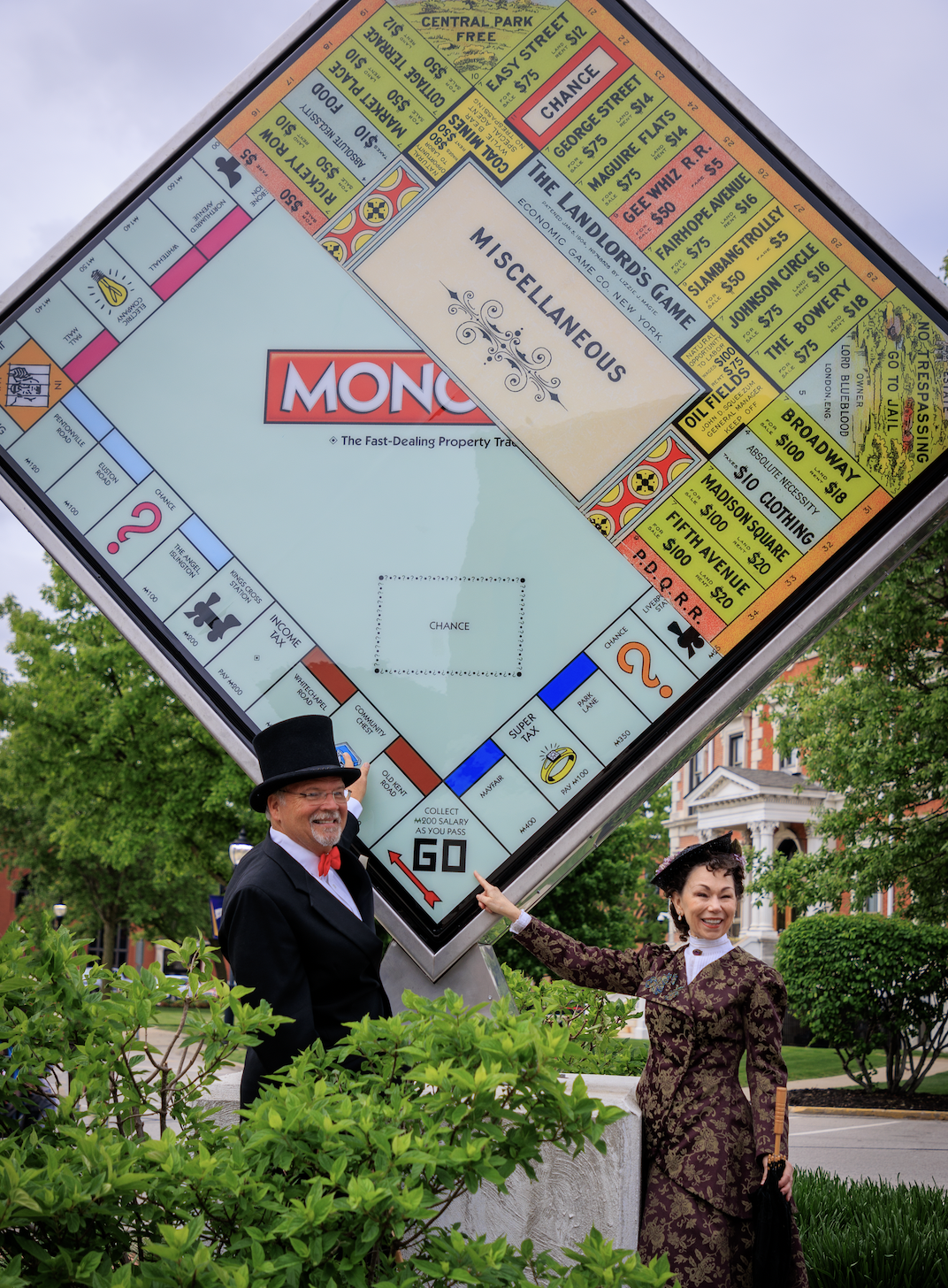
37. Monopoly and Landlord's Game Sculpture
The second of four Monopoly-themed statues found as part of Macombopoly in the downtown Courthouse Square is the Landlord's Game and Monopoly sculpture – an ode to Lizzie's original invention.
“The Landlord’s Game” which eventually became known as the game of “Monopoly”, was invented by Lizzie in 1903. She filed a legal claim for the game which, three decades later, became what we know as the Monopoly board game today.
The plat of the original board game and Monopoly is surprisingly similar to that of Macomb’s Downtown Square. In one corner were the Poor House and the public park and across the board was the jail.
38. Home of Immunologist, Dr. Ruth Tunnicliff
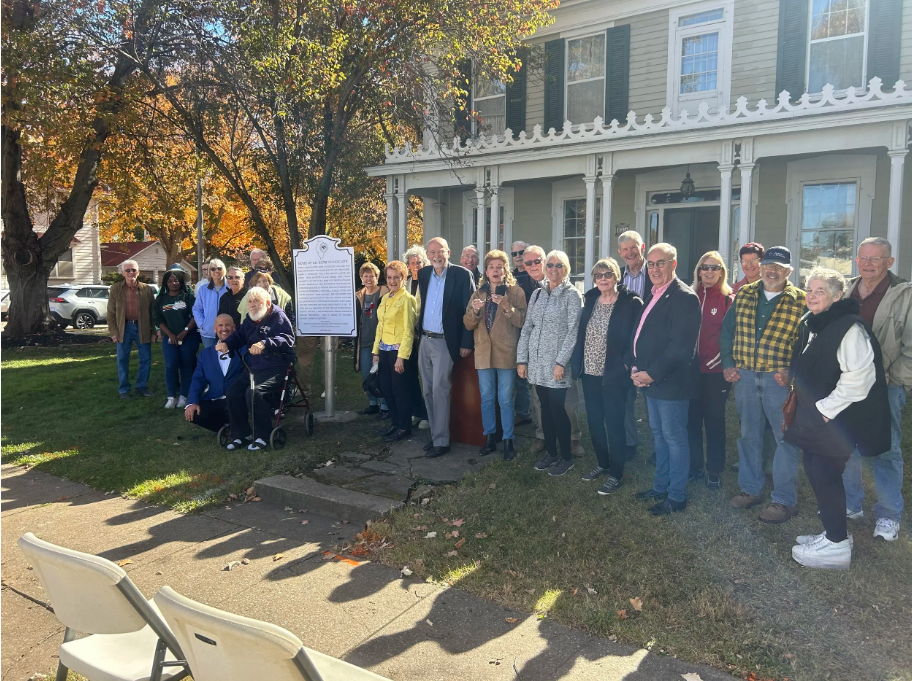
This marker outside Dr. Ruth Tunnicliff's home in Macomb recognizes her as groundbreaking female leader in disease prevention. Ruth May Tunnicliff was the youngest of three remarkable sisters born in Macomb. Like her sisters, Ruth was tutored at their home, probably by her mother, and then attended Vassar College and received her A.B. degree with Phi Beta Kappa honors at the age of 19, as did her sisters.
Ruth took pre-med courses at the University of Chicago in the late 1890’s, followed by medical study at the Women’s Medical College at Northwestern University and then Rush Medical College. She received her M.D. from Rush in 1903 in the first class to graduate women (nine women and 250 men).
Dr. Tunnicliff did pioneering research on various types of streptococci. Her major work included the discovery of the diplococcus present in the secretions (eyes, nose, mouth) of measles patients in 1917. Tunnicliff produced measles in animals and then worked out a serum. She was the first to develop an inoculation to prevent this devastating yet common disease, which in the early 20th century attacked some three to four million Americans every year. Tunnicliff’s serum, if given within 1-2 days after exposure, could successfully prevent measles.
Her achievements were remarkable, but she always struggled against gender bias. Despite being a distinguished research bacteriologist at the renowned McCormick Institute, she was never accepted as a teaching faculty member because of her gender. This marker, recognizing Ruth Tunnicliff, whose research on measles saved countless lives around the globe, reminds us of the need to preserve the past of our community, and, in a purpose-driven way, to pass it on to future generations.
Dr. Ruth Tunnicliff is interned in Macomb’s Oakwood Cemetery.
39. Dr. Lillian Snyder's Baxter/Snyder Center for Icarian Studies at WIU
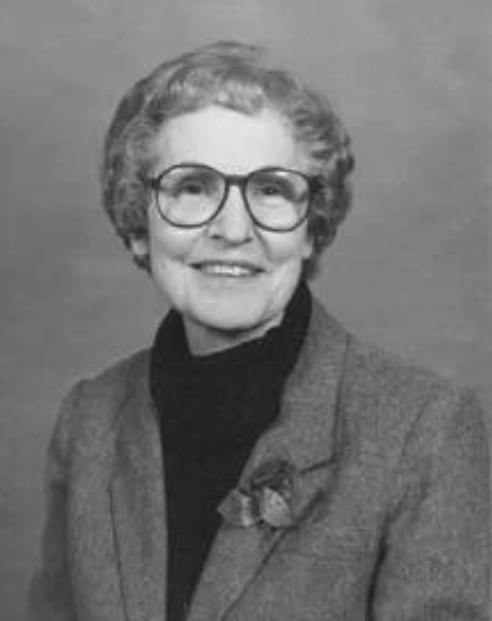
Dr. Lillian Snyder was a founding member of the National Icarian Heritage Society, a member and past president of the Nauvoo Historical Society, and a member of the Illinois State Historical Society, Institute of Icarian Investigations, and the Communal Studies Association. Her love and devotion to Icaria, the nineteenth century French utopiain experiment that settled and thrived in Nauvoo from 1849-1860, provided her with a lifelong mission to preserve the society’s heritage.
A descendant of Icarian communalists, she was a driving force in the founding and developing of the Baxter/Snyder Center for Icarian Studies at Western Illinois University in Macomb, IL, and in August 2004, supported its preservation through a gift for the Endowed Professor of Icarian and Regional Studies at WIU Archives and Special Collections. Dr. Snyder also bequeathed properties in Nauvoo to the Illinois State Historical Society to perpetuate the Icarian mission in the Nauvoo community. The Lillian Snyder Icarian Living History Foundation was founded in her honor.
40. Mary Matalin, Political Consultant from Macomb and WIU
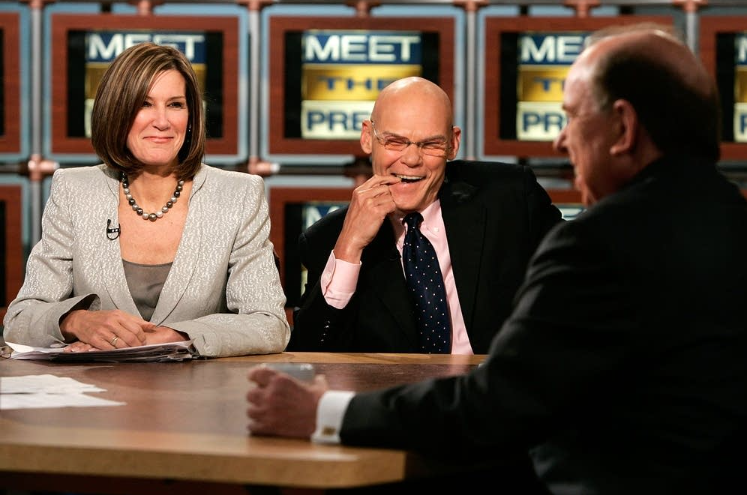
Mary Joe Matalin is an American political consultant well known for her work with the Republican Party. A graduate of Western Illinois University in Macomb, she has served under President Ronald Reagan, was campaign director for George H. W. Bush, was an assistant to President George W. Bush, and counselor to Vice President Dick Cheney until 2003. Matalin has been chief editor of Threshold Editions, a conservative publishing imprint at Simon & Schuster, since March 2005. She is married to Democratic political consultant James Carville.
Matalin was a host of CNN‘s Crossfire political debate show, and in 1993, she co-hosted Equal Time, which aired on the CNBC business television channel. Matalin was also the host of her own talk radio show in the 1990s, The Mary Matalin Show, which was carried on the CBS Radio Network. She is currently on the nationally syndicated radio program Both Sides Now w/ Huffington & Matalin, hosted by Mark J. Green and aired weekends on 120 stations. She also appears in the award-winning documentary film Boogie Man: The Lee Atwater Story and also played herself, opposite her husband, James Carville, John Slattery, and Mary McCormack in the short lived HBO series K Street.
41. Looking For Lincoln Wayside Exhibit
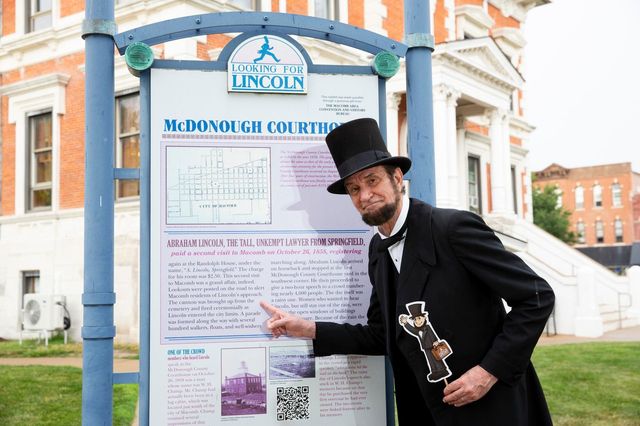
The Looking For Lincoln Wayside Exhibit, another stop on the Looking For Lincoln Tour, tells the story of then senate candidate Abraham Lincoln’s stays in Macomb. The story illustrates a momentous discussion Lincoln had with Joseph Medill, co-owner and managing editor of The Chicago Tribune and Mayor of Chicago 1971-1873, and James Magie, owner of the Macomb Journal and father of Elizabeth "Lizzie" Magie (inventor of the board game Monopoly).
Their conversation took place at The Randolph House Hotel and had a significant impact on Lincoln‘s impending political career – and ultimately, his future in becoming President of the United States.
🎩 Hear from Abraham Lincoln about these conversations and the Looking For Lincoln Wayside Exhibit here.
42. Abraham Lincoln Portrait
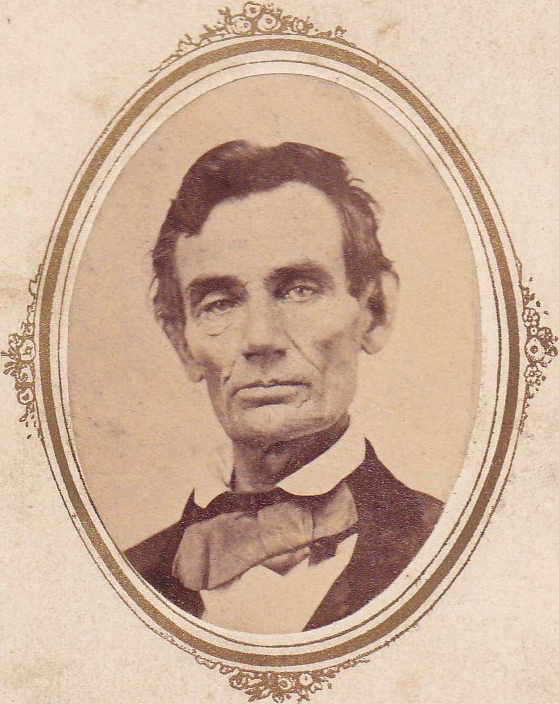
William Painter Pearson took an ambrotype image of Abraham Lincoln in Macomb.
Ambrotypes were made on a glass plate coated with a wet, light-sensitive substance, which when developed and dried, produced a negative image. The negative then had to be mounted against a dark background or coated with a dark varnish to give the illusion of a positive.
Lincoln stopped in Macomb during the period of his seven "Great Debates" with Stephen Douglas. Pearson is the only photographer in Macomb to take Lincoln’s portrait.
In 1858, Pearson moved to Macomb from Centerville, Butler County, Pennsylvania, where Pearson then established his photography studio. The studio was on the second floor of a building on the southeast corner of the Courthouse Square, where now stands the Clock Tower Bank. He is buried in Oakwood Cemetery, Macomb. This stop as also part of the Looking For Lincoln Tour.
🎩 Hear from Abraham Lincoln about his ambrotype portrait here.
43. Malpass Library Archives
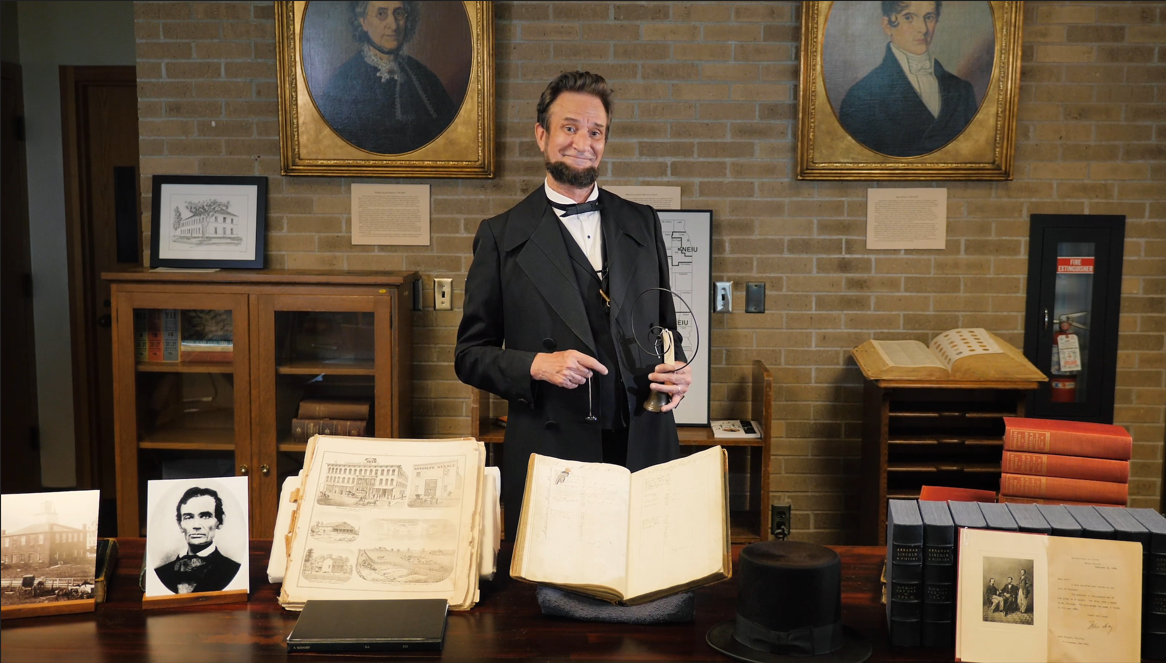
The Western Illinois University Malpass Library Archives & Special Collections house artifacts pertaining to and of the Lincoln era. Key artifacts include the Randolph House Hotel guest bell, the Randolph House Hotel guest registry (in which Lincoln signed twice), and an ambrotype image of Lincoln taken by Macomb photographer William Painter Pearson.
The Archives and Special Collections unit of Leslie F. Malpass Library at WIU has not only a remarkable Lincoln collection, and various microfilmed Illinois newspapers from the Lincoln era, but has collections related to such figures as Lincoln’s presidential secretary John Hay and noted Lincoln historian Carl Sandburg. So, for those with an interest in Lincoln, and his world, Macomb is a great location for historical inquiry and research.
The library and its archives are open Monday-Friday 8:00 a.m. - 4:30 p.m. and are closed on University holidays.
🎩 Hear more about the Malpass Library Archives from Abraham Lincoln here.
44. Stickle Half-Way House
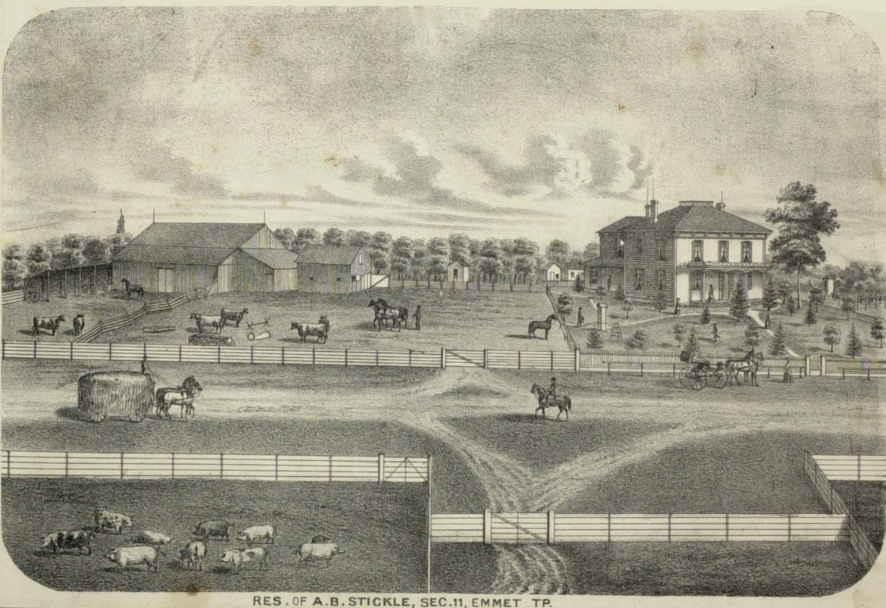
In 1840, Abram Stickle built a two-story frame house on Emerson road north of Macomb, right on the most important route in early McDonough County – Burlington Road (now Emerson Rd.). The Stickle Farm was, in fact, half way between Beardstown on the Illinois River and Burlington on the Mississippi River.
Stickle invited travelers, especially livestock drivers, to camp on his property – which soon became known as "Half-Way Farm." Local folks knew that Lincoln passed along the old Burlington Road with his military company (of which he was captain) in 1832, heading north for the Black Hawk War, and apparently again in 1858, when he was campaigning for the senate.
There are old now hard-to-find Lincoln markers near the site, including a sign carved into a local cement road fixture, not far from the farm, that says, "Abraham Lincoln's Route 1832 and 1858." Stickle tore down his original 1840 house and built a new one in 1866, which still stands at the location today. This stop is also part of the Looking For Lincoln Tour.
🎩 Learn more about the history of the Stickle Half-Way House from Abraham Lincoln here.
45. Camp Creek Cemetery
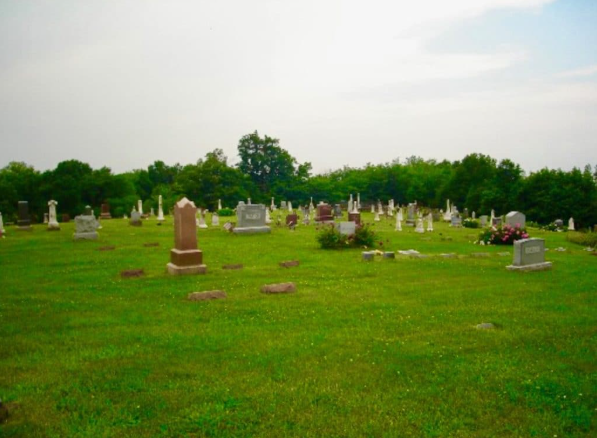
Many of the Allison and Blazer families’ graves can also be found in McDonough County's Camp Creek Cemetery, which was established in 1832 (just a few decades before the Underground Railroad reached its peak). Pay a visit to honor these fiercely brave civilians, who put their lives at risk to assist families and individual traveling through the Underground Railroad to freedom.